

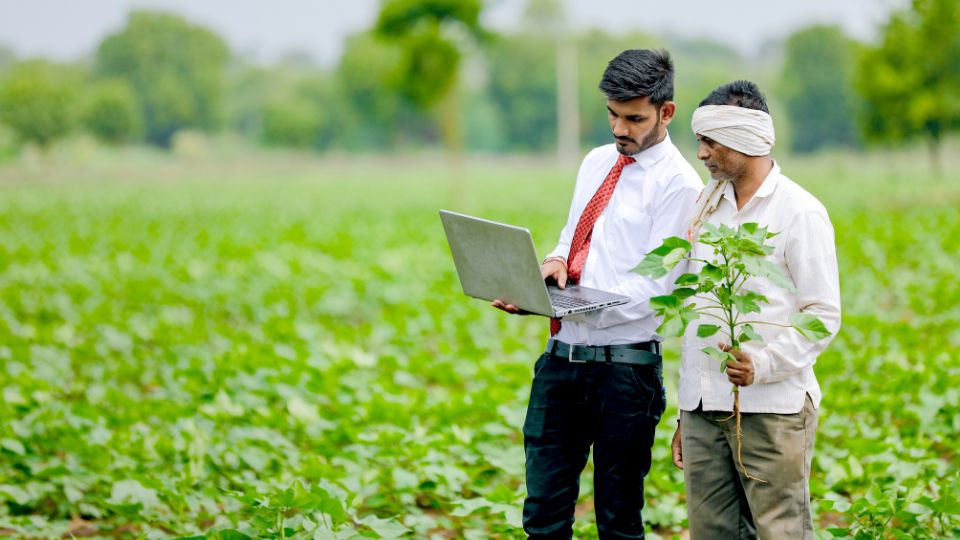
Reimagining the Village Economy
For decades, the village has been portrayed as a place of scarcity — limited opportunity, low income, and migration. Yet the rural development model presented by the Gurukulam demonstrates something radically different: the village is not poor — it is under-organised.
Rural empowerment is not charity. It is economic restructuring. The goal is simple yet transformative: to turn rural youth from job seekers into job givers, and to demonstrate that a well-planned village ecosystem can generate dignified incomes of ₹25,000–₹30,000 per month without forcing migration to cities.
This model rests on three pillars: high-value agriculture, cottage industries, and value addition.
High-Value Crops: Farming as Enterprise
1. Rosemary – The Aroma Mission
Rosemary is cultivated not merely as a herb, but as an industrial crop. Through on-site distillation units, rosemary oil can fetch approximately ₹12,000 per litre. Instead of selling raw produce at low margins, the village transforms into a micro-processing hub.
The principle is clear: processing multiplies value.
2. Aloe Vera – Low Risk, High Return
Aloe Vera has an 8-month crop cycle and is naturally resistant to wildlife such as monkeys — a common challenge in rural farming.
The real opportunity lies in processing:
- Aloe gel
- Herbal soaps
- Health juices
- Cosmetic products
When converted locally, Aloe Vera shifts from a farm commodity to a branded product with significantly higher returns.
3. Moringa – From Leaf to Global Product
Moringa leaves sold raw generate minimal income. However, when dried, powdered, and hygienically packaged, they enter global nutraceutical markets with strong demand.
The model prioritizes value-added processing rather than raw sale, ensuring that profit margins remain within the village economy.
Cottage Industries: Wealth That Stays in the Village
1. Cow-Based Products
Indigenous cow by-products are transformed into valuable goods such as:
- Natural phenyl (floor cleaner)
- Herbal tooth powder
- Organic manure
The philosophy is straightforward: everyday household products should be manufactured locally wherever possible, preventing money from flowing out of rural communities to large corporations. Each locally produced item strengthens the village’s circular economy.
2. Textile Training Units
Women in villages are trained in garment production and stitching. Instead of seasonal or low-paying labour, they produce ready-made garments for district markets and earn stable incomes.
This approach fosters empowerment through skill development and entrepreneurship rather than dependency.
Natural Colours: Reviving Bio-Processing Traditions
Sindhoor (Bixa orellana) is processed to create natural food colouring and cosmetic-grade pigments.
In place of synthetic dyes, the village produces sustainable, plant-based colour products aligned with modern consumer demand for natural alternatives. This integrates traditional knowledge with contemporary market opportunities.
The Bigger Vision: True Economic Independence
The rural empowerment model integrates agriculture, processing, manufacturing, skill development, and market linkage into one cohesive ecosystem.
This is not subsistence farming — it is structured rural entrepreneurship.
When villages produce a significant portion of what they consume — from cleaning products to clothing — money circulates locally, migration reduces, and dignity rises. Youth remain in villages not out of compulsion, but because opportunity exists at home.
The future of rural India lies not in subsidies, but in skill, value addition, and enterprise.
That is the essence of the Job Giver Model.